
Facing the dual threats of rising sea levels and increasingly intense rainfall, Rotterdam has emerged as a global leader in innovative water management and urban climate resilience. With over 80% of the city situated below sea level, Rotterdam has no choice but to treat climate adaptation not as an optional add-on but as an urgent, citywide priority. This geographic reality has pushed local policymakers, designers, and engineers to radically rethink how urban infrastructure can serve multiple functions, leading to one of the city’s most inventive strategies: Climate Adaptation Rooftops.
This concept takes advantage of the city’s vast, underutilized roofscape, transforming flat roofs into active spaces that store stormwater, reduce urban heat, support biodiversity, generate energy, and foster community engagement. The initiative grew from a larger mission launched in the early 2000s when Rotterdam committed to becoming climate-proof by 2030. Following a series of damaging floods and with growing awareness of global climate risks, the city galvanized collaboration among local government, universities, private developers, and citizens to explore creative, scalable solutions.
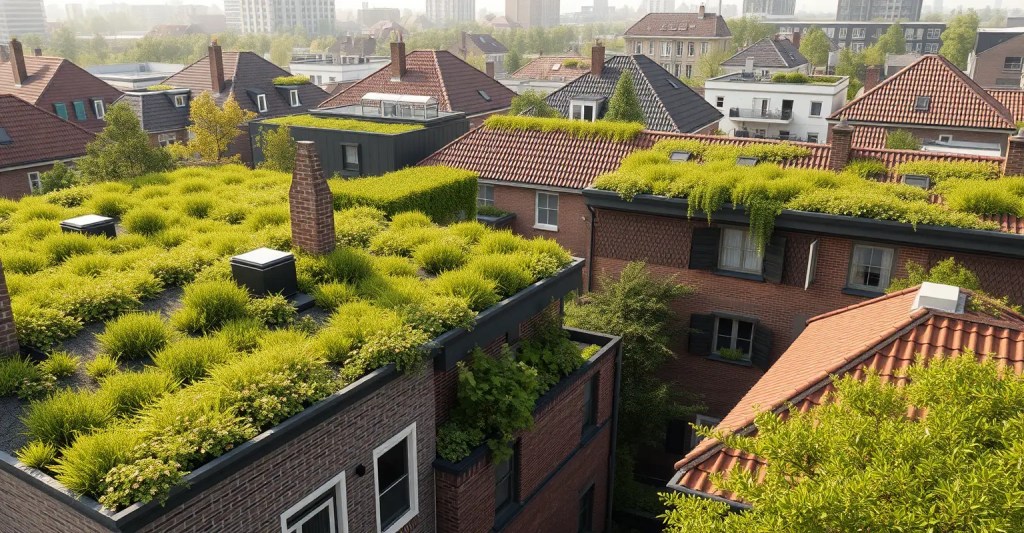
Pilot projects soon followed, testing the functionality and benefits of adaptive rooftops. Blue roofs were developed to temporarily hold excess rainwater, reducing strain on the city’s drainage systems during extreme downpours. Green roofs, in contrast, featured layers of vegetation that absorbed rain, provided natural insulation, attracted pollinators, and improved air quality. These systems were often combined into hybrid rooftop designs that offer the best of both worlds. Planners also explored the social and ecological potential of rooftops—how they could become accessible public or semi-public spaces, not just technical infrastructure.
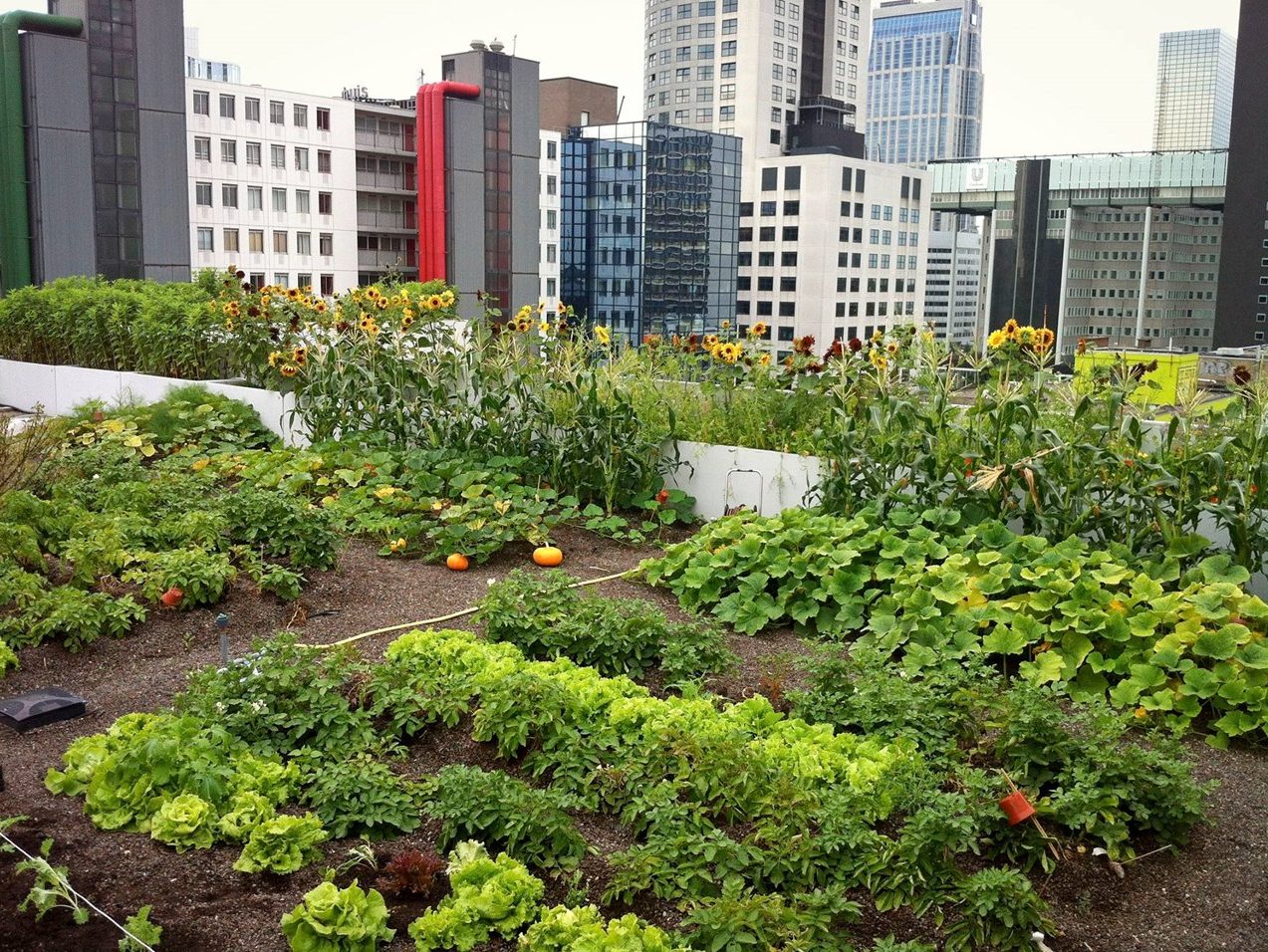
One of the most celebrated examples of this approach is the DakAkker, Europe’s largest rooftop farm, located on top of the Schieblock building in central Rotterdam. The DakAkker produces fresh vegetables, herbs, and honey, using a smart water management system that includes solar-powered sensors and water retention technology. The rooftop also hosts solar panels, contributing to the building’s energy supply. The space doubles as an educational hub, where locals and visitors learn about urban agriculture, sustainable food systems, and climate resilience.
Another standout is the Rotterdam Rooftop Walk, a public event and temporary installation that connected multiple rooftops with bridges, showcasing how these spaces could be reimagined as part of the city’s cultural and ecological fabric. It allowed thousands of residents to experience firsthand the potential of elevated green infrastructure and opened up new conversations around rooftop accessibility and usage.

Today, rooftop adaptation is fully embedded in Rotterdam’s urban planning strategy. The city has mapped over 18 square kilometers of flat roofs with potential for climate adaptation and is actively incentivizing property owners to green or blue their rooftops. Public funding, design competitions, and open-source resources have helped make these projects more accessible to private citizens and small businesses.
More than just a clever workaround, Rotterdam’s rooftop transformation reflects a paradigm shift in how cities confront climate threats—by embracing multifunctionality, community participation, and nature-based solutions. The initiative demonstrates that even overlooked, in-between spaces like rooftops can become central to the urban climate response, offering both environmental and social value.
As cities around the world face growing climate pressures, Rotterdam serves as a powerful model for how to turn constraint into creativity—and how every square meter, even above our heads, can play a role in building a more resilient future.
— Jan Rotmans, Dutch sustainability expert & advisor to Rotterdam’s climate initiatives“We want to use every layer of the city to contribute to climate adaptation. Rooftops are our hidden potential.”
Take Aways
Stormwater management through blue roofs.
Rooftops with blue infrastructure are designed to temporarily store excess rainwater, helping delay its release into the city’s drainage system. This reduces runoff pressure during intense storms, lowers the risk of flooding, and allows for more controlled water flow.
Reduced urban heat island effect.
Green roofs, layered with soil and vegetation, not only absorb rainwater but also lower rooftop temperatures, cool surrounding air, and reduce the need for air conditioning.
Urban agriculture and public use.
Projects like DakAkker show how rooftops can serve multiple community functions in one place. By combining food production, green energy, and engagement opportunities, these spaces contribute to both urban sustainability and vibrant community life.
Energy efficiency and solar integration.
Some rooftops use biosolar systems, combining vegetation with solar panels to maximize space and function. The plants help cool the panels naturally, which can improve energy efficiency and extend their lifespan, all while supporting biodiversity.
 ARISE
ARISE 